Showing posts with label Sustainable. Show all posts

Tuesday, August 24, 2010

Veja - Is Another World Possible?

Article by Camilla Doig Lorentzen


Veja is "just a drop in the ocean", they state on their website. Luckily for us, this drop exists and there are becoming more and more of them.

With organic cotton from the Northeast of Brazil, wild Amazonian rubber and ecological leather; Veja is working under three main principles:

1. Using ecological inputs
2. Using fair-trade cotton and latex
3. Respecting workers' dignity


In order to reduce CO2 emissions, all trainers and accessories are transported by boat from Porto Alegre, Brazil to Le Havre, France. From there they travel in barges along the canals to the Parisian suburbs.

They use recycled paper and cardboard for their packaging, and finally Veja uses ENERCOOP (a cooperative of green electricity) in their headquarters instead of EDF (the French national nuclear energy supplier).

"Let's try to offer a different vision which combines fair-trade and ecology and links together economy, social initiatives and the environment. A vision that proposes cultural change."


More in-depth information can be found on the Vela website.

Also...Check out this short film about the making-process of Veja-sneakers:


Images from www.veja.fr.com  

Tuesday, August 17, 2010

Hopping on the "Zero-Waste" Train

Article by Andrea Krystine


Although many are adopting new means of fashionable consumption through wearing organic or buying second-hand, these acts alone are simply not going to cut it when it comes to making a dent of true sustainability in the fashion industry as we know it.

Reality Check: Because it is cheaper to dump fabric scraps than recycle them, 15-20% of apparel production fabric ends up as waste! (per NY Times)

A more efficient and thoroughly sustainable concept that will allow style to save us is Zero-Waste, a production process that has already been utilized in other countries, by designers like Zandra Rhodes and Mark Liu. Zero-Waste gives designers the challenge of using the entirety of their fabrics without any -or very little- waste. Involving much conception and intricate patterns, zero-waste planning must be carefully calculated in order to achieve ultimate utilization.

In September of this year, Parson New School for Design is offering the first U.S. fashion course in zero-waste. In addition to the publication of two new books on the subject, zero-waste has also inspired the A + D Gallery of Chicago that is planning for an exhibition dedicated to zero-waste fashions due March of 2011.

And so we are catching on. May I add a big F I N A L L Y ! ! ?


Images from Mark Liu Collections

Edun's Mission

Article by Camilla Doig Lorentzen


Ali Hewson couldn't possibly have guessed how life would turn out when she met her future husband at Dublin's Mount Temple Comprehensive School in 1975. Her high school sweetheart, Paul, now known as Bono, perhaps the biggest rock star (and according to Time in 2009, one of the most influential people) in the world - thanks to his many charitable initiatives. In 2005, the couple launched EDUN, a fashion company that promotes trade above aid in Africa and other developing countries by using factories that pay fair wages, creating jobs and encouraging investment in these areas. These days Hewson divides her time between family, campaigning and running the now multinational company.

In May 2009, luxury group LVMH took a substantial stake in the company adding EDUN to their stable of world-class brands. With the expertise and support of LVMH, EDUN now have the tools to become a global fashion brand.

While EDUN's primary focus is trade, the brand actively engages in sourcing organic and sustainable materials whenever possible. Organic cotton is not only a responsible environmental solution, but also provides healthier working conditions and is a valuable market opportunity for farmers in Africa.


Images from www.edun.com

Tuesday, August 10, 2010

Arne & Carlos - Preserving century-old knitting techniques

Article by Camilla Doig Lorentzen


Arne Nerjordet and Carlos Zachrison, Norwegian and Swedish respectively, established Arne & Carlos in 2002. Drawing on their traditional Scandinavian influences and their natural environment, they create original and visually striking knitwear. Through experience gained from working alongside Scandinavia's most respected knitting practitioners, many of them elderly women using century-old techniques, Arne & Carlos seek to preserve these techniques as well as create pieces that are modern and new.


While Arne & Carlos' speciality knitwear draws on Scandinavian traditions for inspiration, it is Peru and its long history of artisanal skills, that forms the base for the designers' production. All knitwear is crafted by artisans, with half of the collection being hand-made, the other half machine-made, and the finish on all garments done by hand.

Arne & Carlos' creative base however is located 190 kilometers north of Oslo in the Valdres region of Norway, in a disused railway station. This idyllic location is a source of inspiration as well as a haven for peace and tranquility. There, Arne & Carlos absorb the rich tradition of Scandinavian arts and crafts while adding their own personal inspirations.


Images from www.arne-carlos.com

American Appeals

Article by Andrea Krystine


Since the debut of their 100% USDA certified organic cotton "Sustainable Edition", American Apparel has been working on gradually integrating organic fibers into their main production lines. As a company that strives to find a balance between capitalist success and environmental/social success, American Apparel is actively seeking innovative ways to reduce negative impacts on cotton cultivation. Doing such might just strengthen their dedication towards social awareness.

In edition to their support of the improvement of conventional agricultural methods, AA contributes to the green fashion movement with recycled vintage offerings via California Select- a supplement to their retail stores that offers handmade/reconstructed pieces made from vintage materials


Images from American Apparel website

--------------------------------------------------------------------------------------------------------------------------

PS: as if you didn't recognize beautiful Lani (in pics above), who modeled in our 2009 Ecologique Photo Shoot ;)


Photo by Sandifer Photography

Sunday, August 1, 2010

A Union of Compassion and Creativity

Article by Camilla Doig Lorentzen

In 1991, Co-owner and Creative Director, Inder Bedi, was challenged by a mahatma to go vegetarian for thirty days. It was during this time that Inder devised the business plan for an eco/vegan fashion house.

First written as a university project in 1995, and eventually launched as MATT & NAT, Inder focused on cutting edge fashion, social responsibility, and a balance of opposites emerges, thus representing the duality of MATT & NAT's soul.

MATT & NAT’s 21 water bottle initiative has further advanced their commitment to social responsibility and to the environment; all linings are made from recycled plastic water bottles. A message inside of each bag will let you know exactly how many bottles were recycled to produce your accessory.

In my opinion, Matt & Nat's men's collection captures current trends very well, which unfortunately is not so common within ecological fashion. The style is simple with easily recognizable shapes as well as clean lines. Both of which, I think, are very important in men's fashion, in particular. As well as being made from recycled bottles, the bags are made from canvas and vegan leather with details like heavy buckles metal zips and metal studs.


I love the perforated detailing on the front of the wallet, as well as its slender and sophisticated look.


This black vegan leather handbag includes a 100% recycled aqua faux suede lining, tone on tone stitching and antique silver hardware. The Bauhaus features top double zip closure, 2 external zipper pockets on front, 1 external magnetic pocket on back, and 1 snap pocket on side. Interior includes 3 pen holders, zip, cell phone and PDA pockets. It also comes with a detachable, adjustable shoulder strap


The metal studs on the front give this portfolio a young and fresh look. Great for an all important interview!

Black vegan leather portfolio with 100% recycled aqua faux suede lining, tone on tone stitching and antique brass hardware. The LCD features double top zip around closure with interior zip, cell phone, PDA and 3 pen pockets. 14”X10.25”X1.25”

Matt & Nat are based in Canada, but their products can be bought from websites www.mattandnat.com and www.asos.com


Images from www.matandnat.com

Friday, July 23, 2010

Baron Wells & the Endless Summer

Article by Camilla Doig Lorentzen


All Baron Wells products are designed to promote a sartorial and sustainable lifestyle. They are designed and developed in New York City. From tailored shirts to fitted board shorts, their ethics is to be conscious of their impact, and of the factories they choose to work with. Producing locally and sourcing more sustainable materials, is as important as their sense of style and craftmanship.


Baron Wells is a small focused collection of shirts, sea pants, neckwear and accessories for both men and women. Modeled after the young wayfarers in search of perfectly peeling waves in Bruce Brown's 1968 classic, "The Endless Summer", with just a little quirk thrown in for good measure.


Images from Baron Wells website

Sunday, July 18, 2010

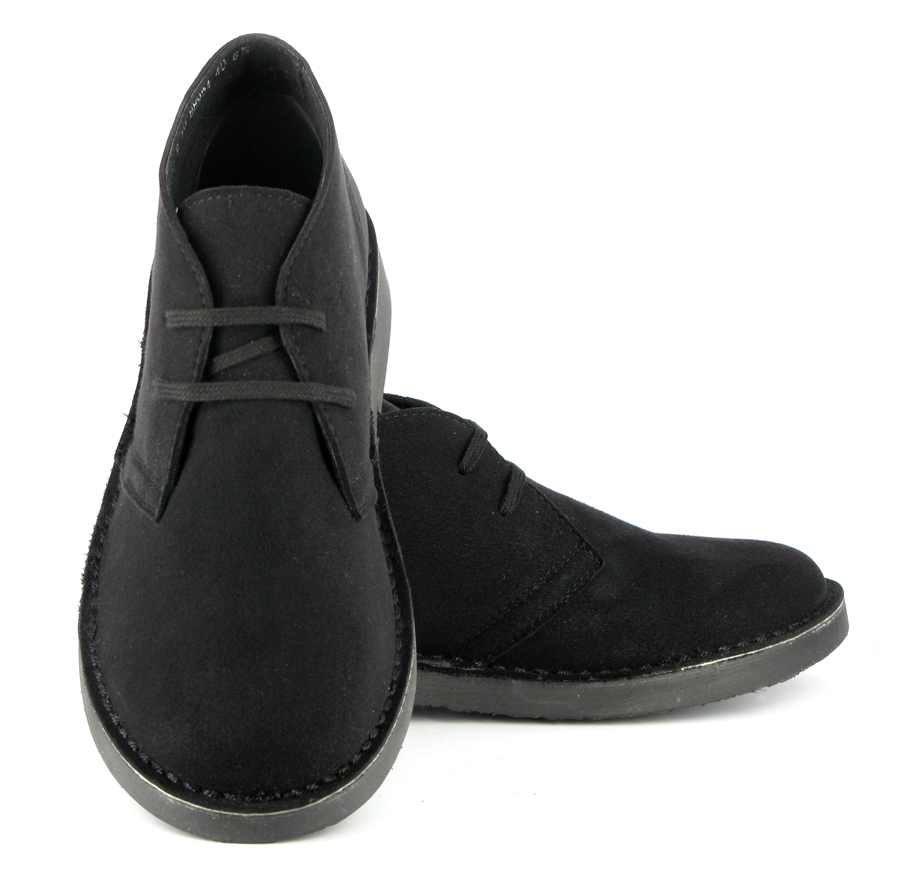
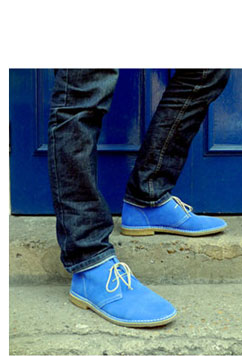
Pour L'homme: Vegetarian Desert Boots

Article by Camilla Doig Lorentzen

The original desert boot was created in 1950 by Nathan Clark who got the idea from crepe-soled, rough suede boots which officers in the Eight Army were in the habit of getting made in the Bazaar in Cairo. Now one of the largest footwear companies in the world, Clarks England is also one of the oldest. From its humble beginnings in 1825, in the tiny English village of Street, Somerset, to a global company that manufactures and markets close to 35 million pairs of shoes a year.

The Clarks Original desert boot has been reinvented by many designers such as Aquascutum, Common Projects and Pierre Hardy. Its characteristics are soft, supple full grain leather uppers and a genuine plantation crepe outsole, and two eyelets. 60 long years after it made its dĂ©but, the Desert Boot lives on. Its simplicity, its versatility and its individuality have all helped to secure its place on the roll-call of iconic designs. It’s a cult classic. Every man’s ideal shoe and one that would look great in your wardrobe.

Vegetarian Shoes founder Robin Webb, tells us of the humble beginnings of the veggie shoe brand:


"Veggie Shoes first started in 1990. When I started the business back then, I made all the shoes by hand. In fact, originally I only made one style - a basic lace up shoe. I had started to teach myself to make shoes four years earlier after leaving Art College. I was inspired to hear that in parts of Africa, car tires were recycled into soles. This got me thinking and soon I was making shoes out of anything I could lay my hands on, but being veggie I didn't want to use leather. Then I made an exciting discovery, -a synthetic Microfibre material used for yachting upholstery. It looked and felt like supple leather, but was 'breathable', unlike other plastics. After some experimenting, I realised that this was what I had been looking for, and Vegetarian Shoes was born.

Nowadays, I no longer make shoes (which I do not miss, as it was blooming hard work !). Most of our shoes are made-to-order for us, exclusively to our specification in European and English factories, including the oldest co-op in the country, established in 1881. Vegetarian Shoes is still a small business, and we still operate out of our Gardner Street Shop and nearby office in Brighton, UK. We now send shoes all over the world and a growing number of stores carry a selected range". 


As part of Vegetarian Shoe new line, we find the the classic, casual, light-weight, lace-up desert boot. Made in super soft-to-touch breathable fake-suede microfiber. Utilitarian, practical and stylish. Insole is padded for foot comfort and perforated for moisture absorption/transmission in hot climates. Rugged, double thread stitch-down sole construction. Beautifully finished with corduroy rear and tongue lining and reinforced heel lining. It comes in sand, brown and black.


The vegetarian desert boot can be ordered from here: http://www.vegetarian-shoes.co.uk/-


Photography from http://www.vegetarian-shoes.co.uk

Sunday, June 27, 2010

Mr. Larkin FW 2010


Casey Larkin's "Fallen Fairy" series for Mr. Larkin A/W 2010 was inspired by musicians Tori Amos and Karen O of the Yeah, Yeah, Yeahs. The collection includes organic cotton, hemp silk, and recycled polyester drop-crotch harem pant suits, high-waistey jodhpurs, and flared miniskirts. Sasha Duerr complimented the line with print dyes that were developed using Japanese maple leaves, acorns, and mint.

Ariel Clay also modeled for the line (she's the pretty red head). Clay is an eco-model and advocate of socially and environmentally responsible modeling. She works with some of the best in eco fashion and eco-friendly products.

Love her cute vid contribution on 'being green':


Ariel Clay: Project Green Search from justin wiener on Vimeo.

Ecologique picks: FW '10 Accessories

Article by Andrea Krystine

For those who like to plan ahead or who are interested in turning a new leaf and embracing green fashion these coming months, we offer some fashionable eco accessories choices for you to keep your eye out for!


Sustainable
a. Claudia Schulz Luca Hat ($220) Hand blocked hat w/ Mother-of-pearl buttons www.claudiaschultz.com

i. Shadowplay Necklace “Harness” Necklace Hand-crafted 100% natural fibers.
Swarovski elements and fair trade black silver www.shadowplaycollection.com

Organic/Eco-friendly

f. Bora Aksu Rosie Umbrella Tee ($46)
100% organic Fairtrade certified cotton
www.boraaksu.com

k. Raw Bags Bamboo Cube Clutch ($50)
Eco-friendly. Bamboo with cotton lining, top snap closure
www.raw-bags.com

Recycled/Reconstructed

b. Nashelle Designs Vignette Heart Cuff ($140)
Made from recycled sterling silver sheet metal. Hand cut/distressed. Fair Trade.
www.nashelle.com/

c. Shara Porter Dinosaur coin purse ($30)
Vintage restored leather coin-purse with hand-stamped illustration
www.sharaporter.supermarkethq.com

d. Nashelle Designs—Surface Heart Earrings ($44)
1 inch long. Handmade and fairly traded in the USA. Recycled Gold.
www.nashelle.com/

e. Dirty Librarian Chains Carrel Necklace ($160)
20 different necklaces used to construct. Fair trade.
www.dlcbrooklyn.com

g. Recycled Typewriter Ring ($72)
Made with genuine, vintage typewriter keys set in 100% sterling silver fittings
www.inhabitat.com

h. Olsen Haus Pump ($200)
Made from recycled TV sets
www.Olsenhaus.com

j. Jonquil Juice Leather Ring ($60)
Recycled Leather.
www.etsy.com/shop/jonquiljuice

Monday, June 21, 2010

Ecologique.edu

What does it really mean to be
an "ethical consumer"?

Really, it can mean a lot of things!

As consumers we have a great impact on economic trends...

As independent peeps, we tend to focus on products that enhance our fabulous lives; as “marrieds” we have a great deal of influence on our mate's appearance and the items they purchase; as parents we make decisions that effect all of our family members and their future consumption habits.

What we must always keep in mind is that many of these product choices can either negatively or positively effect our environment, increasing our individual carbon footprint. To be certain we take dainty, little carbon steps --leaving minimal waste-- we must become more aware of the products we purchase as well as their lifecycle and origin.

The goal: to become an ethical consumer by maintaining a positive balance within the products we use to survive, maintain health, keep up with current trends, and look great.


Before you pick up a product or make an impulsive purchase, try to imagine the product benefit, its effect on the earth, the amount of use you will get out of that product, and its disposal.

It is not to say that every single thing that you buy should come in a recycled package, contain no additives, preservatives, or artificial ingredients. To be quite honest, although more and more companies are now adopting sustainable practices, it can difficult at times to find an eco-alternative to what we have been taught for many years to consume!

In my humble opinion, it is all about balance. If a product brings forth more benefit than it does damage to the environment, then it is most likely a better choice. To be more aware of your purchasing habits and to make shifts concerning those habits [towards saving energy and utilizing products that minimize our carbon influences] are GREAT contributions!

It’s also very important to be more knowledgeable about labels and the ingredients that are in the products we buy. Must I make a reference to the phrase “you are what you eat”? We need to be more aware of what we put in/on our face, our bodies... OUR SKIN!

Per the handy Gorgeously Girl App (a great shopping buddy), here’s an example of some top “red alert” chemicals, commonly found in beauty/hygiene products, that should be avoided:

1) Coal Tar (found in some toothpastes)
2) Fragrance (often contain hormone-disrupting chemicals)
3) Hydroquinone (found in skin lighteners/facial moisturizers)
4) Aluminum (found in deodorants and in cosmetics as color additives)
5) Triciosan (used in anti-bacterial products)
6) P-Phenylendiamin, 1, 4 Benzenediamine, and p-Phenyldiamin, and 4-Phenylenediamine (chemicals found in hair dyes)
7) Lead and Mercury (difficult to detect- *tip: look for lead-free lipsticks)

For more in-depth green product tips, see the Gorgeously Green site!


The key is to be more observant-- and I’m not talking about how short that chick’s skirt was, or how trashy her makeup looked. [Quite frankly, if it was eco-friendly, came in a recycled cardboard package, and donated a percentage of profits to Haiti relief efforts -- more power to her!]

We research the schools we want to go to, the “potentials” we would like to date (thanks to facebook), and the vacations we would like to take… how about paying more attention to the small things we often take for granted? --The stuff that we are exposed to on the daily.

Tuesday, June 15, 2010

French Sex Symbol Collabs for Eco Bags


Brigitte Bardot has partnered up with Lancel, a Parisian leather bag company, to create a collection of eco-friendly/green bags made of 100% natural fibers called the Bardot, and Brigitte. This french film icon, and former sex symbol, is an animal rights activist with her own foundation-- Brigitte Bardot Foundation for the Welfare and Protection of Animals.

Per the launch of the 'BB' collection, the Champs Elysees' Lancel store has bordered their location with HOT vintage b & w photos of Brigitte Bardot along with windows of pink gingham-- a print she helped popularized in her days of the itsy bitsy teeny weeny bikini.


For the eco-bag kick-off, Lancel is offering the chance to win a Brigitte bag. See their website for details.


"I gave my youth
and my beauty to men.
I will give my wisdom and
experience and the best
of myself to animals. "

Brigitte Bardot

Wednesday, May 26, 2010

Swim Patterns

Digging the 1950's influence on suits this year + eccentric patterns

With this in mind for your swimsuit shopping, provided are some Sustainable Swimwear options for your consideration...


Emobi One-Piece & Samantha Pleet


Mociun


Kelly B Couture & Lina Renell

Monday, April 26, 2010

Think, Act, Vote T-Challenge

If you are going to do social media, skip the gossip feed and find a site that exemplifies your talents and gifts and coordinates them with the efforts of others. For those interested in the most upcoming and innovative textiles/products associated with the fashion industry.. might I make a suggestion?

The Ethical Fashion Forum is a terrific not-for-profit network focusing particularly on social and environmental sustainability. A site founded by fashion designers and business owners looking for a way to contribute to sustainable practices, the EFF "has been developed by the industry, for the industry".

The forum is primarily made up of designers, students, manufacturers, and business owners. Of these contributors, EFF's Associate Director, Amisha Ghadiali, and her london-based political awareness group, Think, Act, Vote most recently partnered with ethical fashion label Komodo in the effort of producing a carbon neutral t-shirt. The t-shirt was introduced to a slew of London's eco-designers who were given the opportunity to take the 100% organic cotton garment into their workshops for a little T-LC.

Designers such as Junky Styling, Ada Zanditon, Mia, Nancy Dee, Tara Starlet and Miksani took part in this one-week challenge to apply their spin on the tee using only left-over fabrics from their previous collections.

The collection of unique tees were seen at UK Aware, Alternative Fashion Week, and will be on display at Think, Act, Vote's "The Future I Choose Celebration" May 5, 2010.


Ada Zanditon had her way with this "Think, Act, Vote" t-shirt
Photo by: Ecouterre

Friday, January 29, 2010

Ethical Ada


Since the birth of her line in March 2008, Ada Zanditon has presented her collections at the Ethical Fashion Show in Paris, the Estethica show at London Fashion week, and has been showcased in China. She incorporates a variety of organic and natural fabrics as well as innovated waste-reducing/energy-consious solutions into the creation of her elegant fashions.

As a first class graduate from the London College of Fashion, Ada interned with names such as Alexander McQueen and Jonathan Saunders, prior to developing her own line of ethical womenswear.

Ada receives her fabrics from only ethical manufacturers. She uses AZO-free dyes and eco materials ranging from Fair Trade Organic Cotton and Tencel to English Cherry Tree Wood and Hebridean Wool.

All of the garments are produced and manufactured in small sample rooms and factories near Ada's studio, where she promotes a close-business relationship with those involved in the creation of her pieces. Her business ethic also includes a zero waste policy in which all left-over fabric is used for such things as quilting or shoulder pads.


(images from Ada Zanditon SS10 Collection)


Followers